
How can a gathering of imperfect people become a community of God’s kingdom?
Description
1 Samuel 22:1–8 · October 25, 2026 · Team Jesus
22 David left there and escaped to the cave of Adullam; when his brothers and all his father’s house heard of it, they went down there to him.
2 Everyone who was in distress, and everyone who was in debt, and everyone who was discontented gathered to him, and he became captain over them. Those who were with him numbered about four hundred.
3 David went from there to Mizpeh of Moab. He said to the king of Moab, “Please let my father and mother come to you, until I know what God will do for me.”
4 He left them with the king of Moab, and they stayed with him all the time that David was in the stronghold.
5 Then the prophet Gad said to David, “Do not remain in the stronghold; leave and go into the land of Judah.” So David left and went into the forest of Hereth.
6 Saul heard that David and those who were with him had been located. Saul was sitting at Gibeah, under the tamarisk tree on the height, with his spear in his hand, and all his servants were standing around him.
7 Saul said to his servants who stood around him, “Hear now, you Benjaminites; will the son of Jesse give every one of you fields and vineyards? Will he make you all commanders of thousands and commanders of hundreds?
8 Is that why all of you have conspired against me? No one discloses to me when my son makes a league with the son of Jesse; none of you is sorry for me or discloses to me that my son has stirred up my servant against me to lie in wait, as he is doing today.”
The Word of God for the People of God.
Would you pray with me?
Living God, we are ready now to hear your Word.
Help us to listen with our hearts,
In Jesus’ name we pray. Amen.
▶ SLIDE 1 — Korean national soccer team
Image: a photo of the Korean national soccer team
You may not follow Korean soccer very closely. But for those of us who do, it’s been a pretty stressful season.
We have some really great players. and some of them play for big clubs in Europe. But when you actually watch the games and read the news around the team,Rumors of a rift you find yourself asking, “We have all these players…so how did it end up like this?”
Putting the best people together doesn’t automatically give you the best team. And that’s not only true in soccer. We see it at work, we see it in families, and yes, we see it in churches.
Something matters more than who is on the team: what holds those people together, and how that shapes the way they treat one another. That’s what makes a team. But the church was never a team built by picking the best players. So this morning, I want us to hold on to one question together: How can a gathering of imperfect people become a community of God’s kingdom?
THE CAVE
David is the young man who brought down Goliath. But the more people praised him, the more King Saul saw him as a threat. Saul threw a spear at him and sent soldiers to hunt him down, so David had to run for his life.
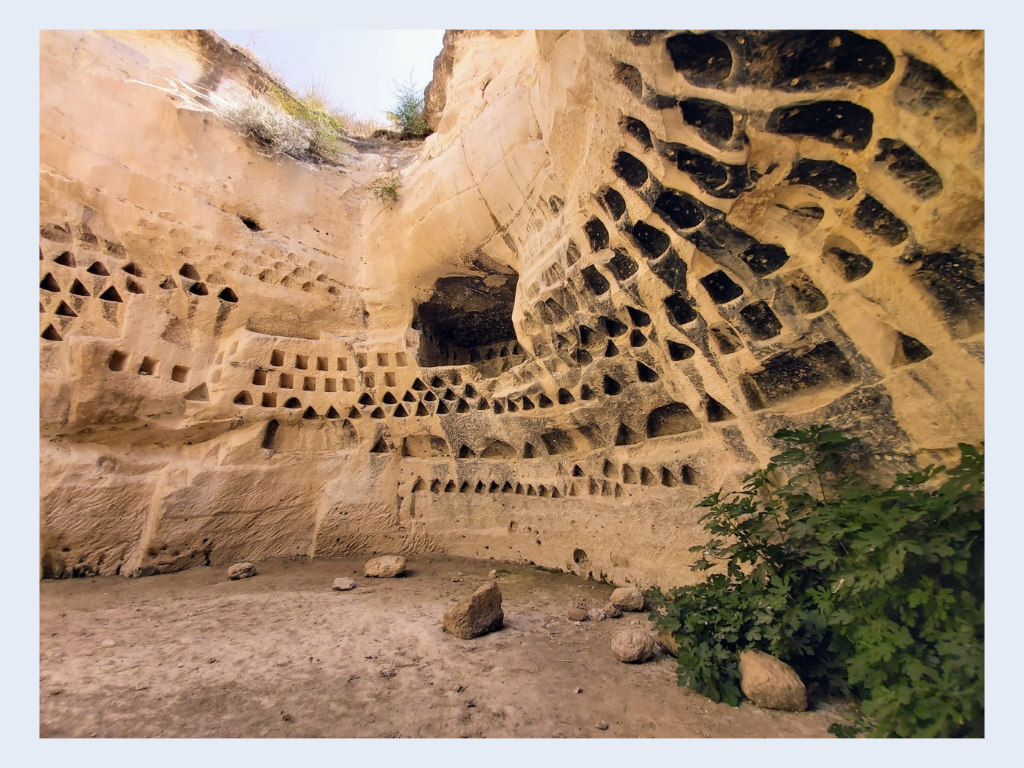
▶ SLIDE 2 — The cave of Adullam in the Shephelah
Image: a map of the Shephelah (low hills between Judah and the Philistine plain) and/or a photo of the caves near Adullam
The place where he hid was the cave of Adullam. Adullam sat in a region of low hills called the Shephelah, caught between the hill country of Judah and the Philistine plain. It was border country, where the two powers kept running into each other. The hills were limestone, full of caves — good places for someone on the run to hide.
And then people start coming to him. First his brothers and his father’s whole household come down, because now David’s family is in danger too. Then others come: everyone who was in distress, everyone who was in debt, and everyone who was discontented — or as another translation puts it, “bitter in soul.” About four hundred of them.
Notice how the Bible introduces these people. It doesn’t tell us what they were good at or what experience they had. It tells us what they were carrying. And we shouldn’t read them as just a few unlucky individuals. They were people who had been pushed out by the way their society worked. The way Saul’s kingdom ran, there was simply no place left for them to stand.
At the beginning, I talked about “imperfect people.” Being imperfect doesn’t mean having some terrible flaw. It means living with struggles that haven’t been solved,
and wounds that haven’t healed yet. That was true of the people in that cave. And honestly, it’s true of us too.
And the David they came to was no different. He was one more person who had fled there, running for his life. So in that cave, there was really no one who could help. Everyone there needed help.
When I first came to this country, before I started seminary, I went to an ESL school for about six months. Every so often during the day, we had a special time. The teacher would take a break, and we students would sit in a circle and just talk with one another. Everyone’s English was pretty rough, and honestly, that’s what made it comfortable. It was okay to make mistakes. We laughed a lot, we became friends quickly. The amazing thing was, even with our broken English and seven different accents all mixed together, we still understood each other! and that time was a real comfort to me.
But when I got home and thought back over the day, something strange would hit me. What did I actually say today? Was any of it right? I had no idea. Now, you know I’m not saying anything bad about that class, right? I loved that time. And honestly, we did grow there — those conversations gave me the courage to keep speaking. But I also learned something in that circle. Sharing the same struggle can bring people together. But it can’t, by itself, show them where to go together.
You may remember what Jesus said: “Can a blind person guide a blind person? Won’t they both fall into a pit?” I think the cave of Adullam was a little like that classroom. And I imagine David was just another student, sitting in the same circle. When people in the same situation gather in one place, it brings real comfort. But that gathering doesn’t automatically become a community that knows where it’s going together.
Wounds and struggles can bring people to the same place. But they cannot bind them together. So what can bind imperfect people together?
FOR ME
In First Samuel 22, the words “for me” show up twice. Once they come from Saul’s mouth, and once from David’s.
Saul is sitting with his spear in his hand, and he asks his servants, “Will the son of Jesse give every one of you fields and vineyards? Will he make you all commanders?” Saul ties people to himself with what he can give them.
Then he says, “None of you is sorry for me.” The palace is full of people, but Saul is alone. The tighter he holds on, the more suspicious and lonely he becomes.
In the end, he even kills the priests of God, simply because they helped David.
Saul was a wounded man too. He lived with the fear that God had rejected him. As Eugene Peterson points out, suffering by itself does not make a person better.
Saul’s pain didn’t make him deeper. It made him sharper, and more focused on protecting himself.
Now look at David. He’s being hunted too, so he has every reason to become like Saul. But when he asks the king of Moab to take care of his parents, he says,
“Please let my father and mother stay with you, until I know what God will do for me.”
It’s the same two words, “for me,” but they’re looking in very different directions. Saul is asking what people will do for him. David is waiting to see what God will do for him.
Here is the answer to our question. What binds people together is not a shared struggle. It is what we hold on to.
Saul’s palace was bound together by rewards, yet no one was sorry for him. The cave had no rewards. But it had a man who was holding on to God. Everyone gets wounded. But who we entrust our wounds to decides what kind of people we become. As someone once put it, a wounded healer, or a spear-thrower. What binds imperfect people together is the God who holds us.
STAY WITH ME
The end of this chapter shows us how a person held by God can hold on to someone else. Abiathar, a priest, the only survivor of Saul’s massacre, comes to David.
He has lost his family, and he has nowhere to go back to. And David is still being hunted. But David says to him, “Stay with me, and do not be afraid. The one who seeks my life seeks your life. You will be safe with me.”
A man who can barely protect himself holds on to someone else’s life. He could do that because he was already held by God.
And this scene points us to the Son of David, Jesus Christ. Just as Abiathar was held by David, we are held by Christ. But there is one difference. David shared the danger. Christ took the danger upon himself. The sin and death that were after our lives, he received in his own body on the cross.
▶ SLIDE 3 — 1 Corinthians 12:26
Text: “If one member suffers, all suffer together with it.”
— 1 Corinthians 12:26 (NRSV)
When the risen Lord showed Thomas his hands, the wounds were still there. He didn’t erase his wounds first and then embrace us. He embraced us with his wounds still there. That is why the church is the body of Christ — a body where, when one member suffers, all suffer together.
Those who are held by Christ can now hold on to others.
CLOSING
Let’s go back to the cave of Adullam one more time. Their problems still haven’t been solved. And as the story goes on, new crises keep coming. And yet we all know this: David’s kingdom began right here — in this cave.
▶ SLIDE 4 — Closing question
Text: “How can a gathering of imperfect people become a community of God’s kingdom?”
At the beginning, we asked: How can a gathering of imperfect people become a community of God’s kingdom? I believe I’ve seen the answer here, in this church.
When my wife and I first came here, you welcomed us with amazing hospitality — and honestly, you still do. And as I’ve gotten to know you, I’ve learned that every one of you, just like me, is carrying something. And still, you keep opening your hearts to anyone who is struggling.
Do you believe that God’s kingdom is being built through you?
I’m now writing my first Charge Conference report at my first appointment, and I’d like to end the part about you like this:
The people of this church love God and depend on God.
Their lives do not always look like a palace.
Yet they are a faithful community, bound together in God.
For whenever someone is struggling,
they are ready to reach out their hands.
Let me sum it up in a few short sentences.
Wounds and struggles bring us to the same place.
But they cannot bind us together.
What binds us is the God who holds us.
Those held by him put down their spears,
and reach out their hands.
Beloved,
even when life feels more like a cave than a palace,
may you live as people held by God,
protecting one another’s lives.
I bless you in the name of the Lord. Amen.
Closing — 9:00 service
So now, I invite you to the Lord’s table.
Details
- Date: October 26, 2026
- Topics: Community, David, Team
- Preacher: Pastor Sunu
- Books: 1 Samuel
- Series: Team Jesus